
Building Resilient Supply Chains: Why Operational Leadership Now Drives CPG Value Creation
For years, supply chain leadership in CPG was expected to do one thing exceptionally well:
Stay out of the way.
If product showed up on time, costs behaved, and retailers weren’t calling with complaints, operations was considered “solid.” Strategy happened elsewhere.
As noted in Bain’s 2025 Consumer Products Report highlighting the impact geopolitical, regulatory, and supply chain pressures, the last two years ended that era.
Commodity swings, freight volatility, labor shortages, regional disruptions, inventory whiplash — what used to be background noise became front-page boardroom discussion. Suddenly, the supply chain wasn’t just supporting strategy.
It was the strategy.
Across middle-market and PE-backed CPG, operational leadership has moved from cost center to enterprise value driver. COOs are now margin architects. Procurement leaders are EBITDA protectors. Plant managers are brand defenders.
And boards are paying attention accordingly.
Volatility Exposed Fragility
As we discussed in our analysis of how volatility is reshaping CEO and CFO mandates, even as pandemic-level disruption eased, instability didn’t disappear. It simply evolved.
- Ingredient costs fluctuated unpredictably.
- Freight rates corrected — then corrected again.
- Labor availability remained uneven.
- Lead times lengthened in some categories while compressing in others.
Many businesses discovered that what looked efficient in stable conditions was brittle under stress.
Lean inventory strategies turned into stockouts. Single-source vendors became risk concentrations. SKU proliferation complicated production scheduling.
The takeaway for sponsors was clear:
Operational resilience is not overhead. It is downside protection — and upside enablement.
The COO Role Was Rewritten
In many portfolio companies, the COO job description quietly expanded.
Previously:
- Manufacturing oversight
- Logistics coordination
- Service-level management
Now:
- Network redesign
- Strategic sourcing diversification
- Cost-pass-through modeling
- Capacity planning aligned with commercial strategy
- Capital allocation prioritization
- Margin defense under stress scenarios
Today’s COO must understand procurement contracts, pricing elasticity, inventory turns, and debt covenants — often in the same conversation.
That’s not an incremental evolution. That’s a promotion.
Procurement Became a Strategic Function
In inflationary cycles, procurement is not a back-office exercise.
It is a competitive advantage.
Strong procurement leaders are now expected to:
- Hedge intelligently without overexposing
- Negotiate flexible supplier agreements
- Identify dual-source alternatives
- Consolidate spend strategically
- Balance cost with service reliability
In several PE-backed businesses, procurement upgrades have delivered faster EBITDA lift than commercial initiatives.
Which is not a sentence anyone would have confidently written five years ago.
SKU Discipline Is Back
Growth cycles encourage complexity. New flavors, new packaging, limited editions, retailer exclusives — the innovation engine rarely slows.
But complexity comes at a cost.
As margin pressure mounted, many boards re-examined SKU portfolios with sharper scrutiny.
Questions that are now common in sponsor reviews:
- Which SKUs meaningfully contribute to margin?
- Which complicate production disproportionately?
- Which dilute purchasing leverage?
- Which absorb working capital unnecessarily?
Operations leaders capable of rationalizing portfolios without damaging brand equity have become particularly valuable.
Because sometimes the most profitable unit is the one you stop producing.
Network Design Is a Board Topic
Manufacturing footprint and distribution strategy are no longer static decisions.
Regionalization, nearshoring, automation investment, and third-party manufacturing partnerships have become strategic debates.
Boards increasingly want COOs who can answer:
- Should we consolidate plants or diversify risk?
- Where does automation produce the highest ROI?
- When does co-manufacturing reduce volatility — and when does it introduce it?
- How do we balance freight cost versus service reliability?
In volatile environments, network flexibility can determine whether a business protects margin or erodes it.
The days of “set it and forget it” footprint planning are over.
Operations and Commercial Strategy Must Align
Perhaps the most important shift is integration.
Supply chain decisions can no longer operate independently of pricing, sales, and marketing.
For example:
- Promotional spikes require manufacturing readiness.
- Retailer negotiations depend on cost structure visibility.
- Pricing strategy relies on input-cost forecasting accuracy.
- Innovation pipelines must reflect capacity realities.
The strongest middle-market CPG companies now operate with tighter alignment between COO and CRO functions — sometimes even shared dashboards.
It turns out that “that’s an operations problem” and “that’s a sales problem” are no longer viable distinctions.
Operational Leadership as Value Creation Lever
Private equity sponsors increasingly view operational upgrades as one of the cleanest levers for EBITDA expansion.
Why?
Because unlike topline projections, cost structure improvements compound reliably.
We’re seeing:
- Earlier installation of seasoned COOs post-close
- Interim operations specialists deployed mid-hold
- Targeted plant-level leadership replacements
- Expanded analytics inside supply chain functions
In some cases, sponsors are upgrading operational leadership before commercial leadership — a reversal from prior cycles.
That shift speaks volumes.
The Cultural Component
Operational resilience is not just structural — it’s behavioral.
Organizations that weather volatility best tend to share traits:
- Cross-functional transparency
- Scenario planning discipline
- Rapid decision-making authority
- Willingness to simplify
Leadership tone matters.
When executives treat supply disruptions as temporary annoyances, teams react differently than when leaders institutionalize preparedness.
Resilient supply chains are built by systems — but sustained by culture.
Conclusion: What This Means for Boards and Sponsors
The last two years elevated operational leadership in CPG in ways that are unlikely to reverse.
Boards now expect:
- COOs with strategic fluency
- Procurement leaders with financial acumen
- Network plans that flex under stress
- SKU portfolios that prioritize profitability over novelty
- Real-time visibility into cost drivers
Supply chain resilience has shifted from tactical priority to enterprise differentiator.
The companies that outperform in volatile cycles will not simply have strong brands or clever marketing campaigns.
They will have operational leaders who can absorb shocks, manage complexity, and quietly protect margin while others scramble.
In today’s environment, the supply chain is no longer the engine room hidden below deck.
It is on the bridge — steering.
And that requires a different caliber of leadership.
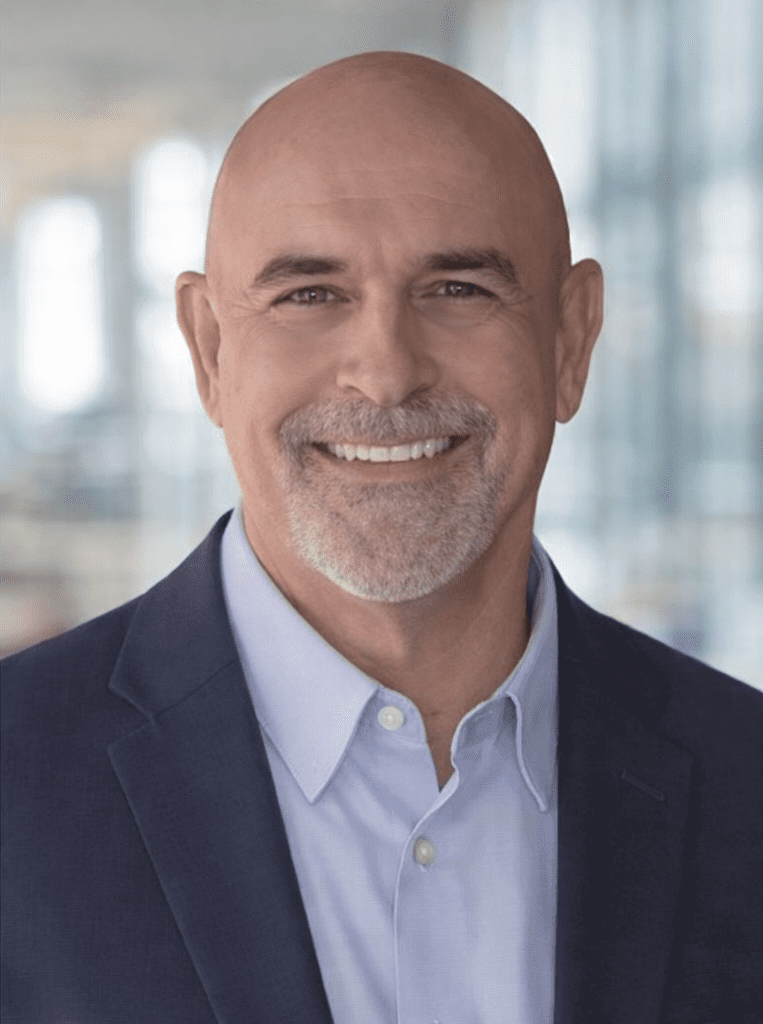
About the AuthorWith nearly 40 years of front-line CPG experience—spanning 25 years at Kraft Foods/Oscar Mayer to founding his own nutrition brand—Kenny understands the mechanics of growth better than most recruiters. As the Founder of Creston Executive Search, he specializes in placing V-level and C-suite talent within middle-market, PE-backed, and founder-led companies. Having managed portfolios exceeding $500MM and received national awards for shopper insights, Kenny bridges the gap between deep industry technicality and high-stakes executive leadership. Click here to connect with Kenny on LinkedIn.
